Friday, March 31, 2006
Bamboo Bell-Shakuhachi-The Bamboo Flute
"Shakuhachi artist Nelson Lee is known for his ceremonial style concerts, where the participants are able to meditate, read, or do calligraphy. "


"Vincent van Gogh"
Happy Birthday-- a day late
'Though I am often in the depths of misery, there is still calmness, pure harmony and music inside me. I see paintings or drawings in the poorest cottages, in the dirtiest corners. And my mind is driven towards these things with an irresistible momentum.'
Vincent van Gogh, letter to his brother, Theo, July 21, 1882"
"Vincent van Gogh"
Happy Birthday-- a day late
'Though I am often in the depths of misery, there is still calmness, pure harmony and music inside me. I see paintings or drawings in the poorest cottages, in the dirtiest corners. And my mind is driven towards these things with an irresistible momentum.'
Vincent van Gogh, letter to his brother, Theo, July 21, 1882"
Monday, March 27, 2006
W P O I S O N
W P O I S O N
This free CGI program generates bogus addresses for robot harvesters. This effectively clogs the spammers data base with fake adresses.
This free CGI program generates bogus addresses for robot harvesters. This effectively clogs the spammers data base with fake adresses.
Sunday, March 26, 2006
Wednesday, March 15, 2006

Sunday, March 12, 2006
Saturday, March 11, 2006
A Review of Oracle Bones
William Wheeler
March 10, 2002
A Review of Oracle Bones
Peter Hessler’s new book about China provides a bit of history, a street level account and perhaps some inspiration for readers and young writers. “Oracle Bones,“ is not an adventure but it is filled with the spirit of youthful exploration, risky ventures and the exploration of China’s mysterious history.
The book is narrative non fiction.
Most of the people described in "Oracle Bones," are migrants-- people who moved to another city for work.
I imagine that this book would appeal to Americans in a similar position.
Hessler, a native of studied English literature at Princeton and Oxford before going to China as a Peace Corps volunteer.
His two year experience as a teacher allowed him to make lasting friendships with students who provided him with some of the most important source material for the book. He also worked as freelance journalist for the New Yorker and the Boston Globe, as well as National Geographic, giving him opportunity to travel and cover different aspects of Chinese life.
The book veers between a youthful narrative, a group of interviews and a document of culture.
The youthful tone works well for Hessler when he describes his own experience changing money with a gray market dealer, or describing a women’s dormitory in a factory in ShenZhen. It is also interesting to read his efforts to stay in China by exploiting his credentials with innovation. In a way, his fakery improves his credibility. He makes a point about .jiade, an aspect of Chinese culture entrenched by centuries of tradition and imitation of tradition.
In one particularly touching passage, Hessler describes attending a class taught by a former student. During the lesson, the teacher drops in subtle references to public events and aludes to private jokes he shares with his American friend, all the while drilling his pupils in simple English. Hessler is clearly proud of his former students mastery of English, but also showing us how Chinese people talk about things without discussing them directly.
Another angle of this book is Hessler’s efforts to disclose the story of Chen Mengjia. Mengjia was a scholar, censured during the Cultural Revolution. His important scholarship did not get published. Mengjia committed suicide during this period.
Mengjia is the author of a study of Shang period artifacts. These Inscribed bones are the earliest known examples of Chinese writing. But the meaning of their inscriptions is obscure. Hessler tries to these artifacts with other writings about China.
One of the authors strategies in to interview people who knew Mengjia, and revisiting sites of interest. This quest ads to the historical content in the book which is also well supplemented by the bibliographical notes.
Hessler also contrasts Mengia's failure against the struggle of his younger subjects who try to find their way in a rapidly changing culture.
While there are some rough points, for example the casual use of Chinese characters in the text, the book is informative and entertaining. It also goes a good way towards establishing Hessler as an authority on the vast and rapidly changing culture of China.
Thursday, March 09, 2006
Dreams in a Mirror
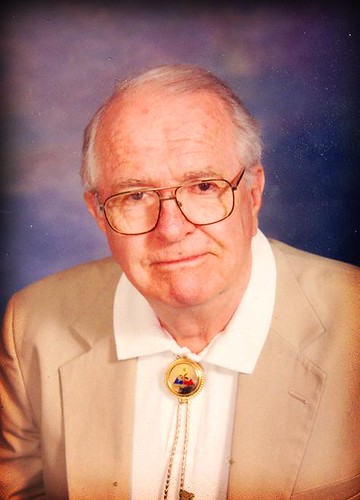
There is a grave in Tennessee
which I did not dig.
I merely filled it in.
That morning I called
about the casket.
A man was making that.
“Well, I’ve already cut the boards he said.”
I had my carpenters tape stretched
The yellow ribbon shivering over the child
The numbers mattered to me.
So he cut the wood to length
Brought the six pieces to the cabin.
The boards were weathered
Grey from exposure, splintered
where the saw had separated
the pieces from a single plank.
We washed the body
Wondering over perfect fingers,
How the blood had pooled on his side.
His face looked worried.
He had golden red hair.
We dressed the body in red flannel
clothing that My Wife made.
Too large and he would not grow into it.
The rain fell hard that day.
Around noon we drove out to the little graveyard.
There were no ministers, only witnesses,
People I could not recognize with their rain gear.
They huddled around my wife consoling her
While I went to the grave with another man.
The hole had already started to fill with water,
The casket floated like a tiny ship.
Then I picked up a shovel and never spoke
until the grave was filled with red earth.
My father never visited the grave.
He died in Oregon on this day in 2002.
Strange, I hadn’t thought about that until now.
I hope that he found Peace.
March 9, 2006
Tuesday, March 07, 2006


Monday, March 06, 2006
What is verse?
If..Then...
If poetry could pick apart the atom,
Unravel D.N.A., or stop old age,
It's value could be measured with a gauge
And read so clearly anyone could fathom
The full five feet of every line and verse.
But there's more to poetry than metered lines,
The by-products of our frustrated lives
Or an attempt to set things right with words.
We could think of poems as frozen time,
As threads of thought, holding words together.
What connects them is not the verse or rhyme
But measured breath, a date, a time, a thought.
An emotion that we had before dying,
A ripple on the waters which we caught.
About Poetry Try It
J. Douglass mentioned one of my 'works" in his online publication, /WRT: Writer Response Theory
It is such a simple thing.
. . .
We can find meaning in all kinds of places,
Thanks JD!
Sunday, March 05, 2006
Saturday, March 04, 2006
Cancer That Won't Quit
This article is more from a bussiness angle. companies launching experimental treatment programs.
Cancer That Won't Quit: "Simply put, the prognosis for those with pancreatic cancer is bad, to say the least. Currently, surgery, radiation and chemotherapy are used to treat it, but several drug companies, from smaller biotechs like Cell Genesys (CEGE:Nasdaq - news - research - Cramer's Take) to pharmaceutical giants like Novartis (NVS:NYSE ADR - news - research - Cramer's Take), are trying to find other options."
Friday, March 03, 2006
Anonymous Visitor
Dear [63.224.195.172]
The past still exists. Remember, History plants a safe in every dream.
Or was it a saint. . . .
I know you spent the time
But no one has spent that much time at this blog without acknowledging.
Sign the guest book. Leave a comment.
You could even write a letter.
Wednesday, March 01, 2006
Happy Birthday S--
Privacy
S-- E-- was one of the few people from high school whose birthday i remember. Because the date was the 29th on leap year, she joked that she was four and a half. I guess that she is about ten now. She slipped out of view back in the eighties. somewhere in San Francisco area.
Subscribe to:
Posts (Atom)

 Posts
Posts

